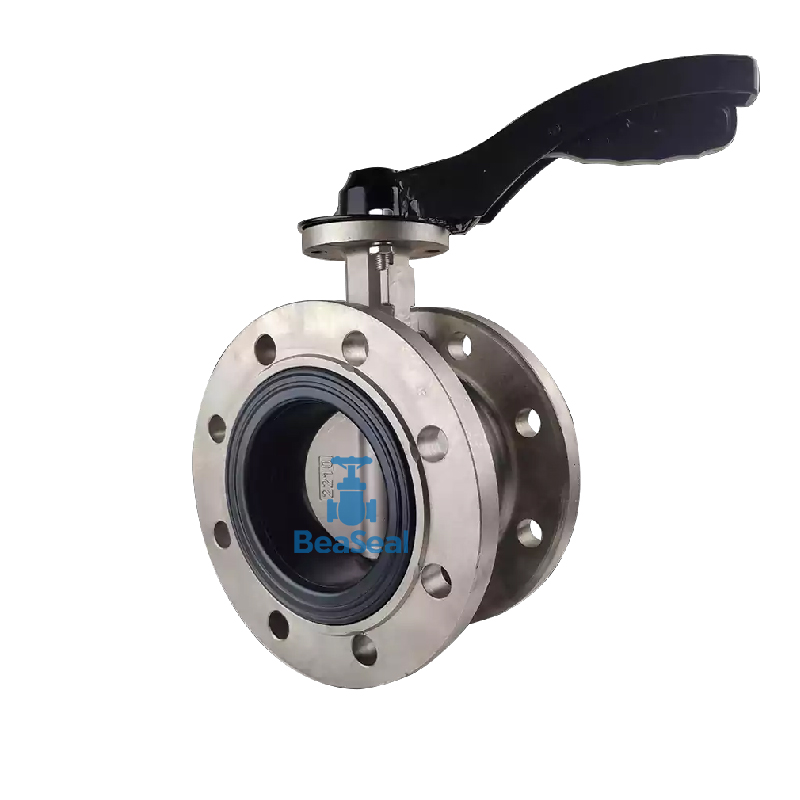
| Category | Description |
|---|---|
| Name | Ball Valve |
| Basic Function | Primarily used for quick, full on/off control of fluid flow. It is not designed for flow regulation (throttling). |
| Working Principle | The valve utilizes a rotating ball with a bore (hole) through its center. 1. Opening: When the handle is turned 90° (a quarter-turn), the bore is aligned with the flow direction, offering a straight-through path for the fluid. 2. Closing: When the handle is turned back 90°, the ball rotates so that the bore is perpendicular to the flow, and the solid sides of the ball block the flow completely. |
| Flow Direction | Typically bi-directional. The flow path is straight when open, creating minimal flow resistance. However, the upstream side is usually identified for optimal sealing performance, especially in trunnion-mounted ball valves. |
| Key Features | Advantages: • Excellent Shut-off: Provides bubble-tight sealing with low torque. • Quick Operation: Only a quarter-turn (90°) required for full open or close. • Low Pressure Drop: The straight flow path offers minimal resistance to flow. • Compact and Lightweight: Compared to gate and globe valves of the same size. • Multi-port Designs: Available for flow diversion or mixing. Disadvantages: • Not Suitable for Throttling: The high-velocity flow in a partially open state can erode the soft seats and damage the ball. • Cavity Trap: In the closed position, the valve body cavity can trap fluid, which may be problematic with freezing or corrosive media. |
| Primary Applications | • Oil and Gas Pipelines (onshore & offshore) • Water and Wastewater Systems • Chemical and Petrochemical Plants (with suitable seat materials) • HVAC Systems • Household Appliances and plumbing • Power Generation |
| Common Types / Designs | • Floating Ball Valve: The ball is held in place by two seat rings and is free to "float" slightly, providing sealing by upstream pressure. • Trunnion Mounted Ball Valve: The ball is fixed on a trunnion, suitable for high-pressure and large-diameter applications. • V-Port Ball Valve: Features a 'V'-shaped ball or seat for limited throttling control. • Multi-port (3-way, 4-way) Ball Valve: For diverting, mixing, or switching flow between multiple lines. • Full Bore Valve: The bore diameter matches the pipe ID, minimizing pressure drop. • Reduced Bore Valve: The bore diameter is one size smaller than the pipe ID, creating a slight pressure drop. |
| Typical Standards | API 6D, ASME B16.34, ISO 17292 |
Delivery is prompt!
By 10-year industry experts!
Diverse payment methods available!
Unbeatable cost performance!